
Support After Loss FAQs
I think I am having a miscarriage, should I call my doctor?
What do I do after I'm told there's no heartbeat?
A Heaven’s Gain Ministries’ trained Advocate for Parents of Perinatal Loss (APPL) can help prepare you for the birth of your baby. See our Support and Services page
What can I do when no one wants to talk about my loss anymore?
Here are some things we at Heaven’s Gain have found to be helpful. Give yourself time to cry each day. Journal every day. Find one friend to confide in. If you need to convey your feelings to your spouse but cannot have an open conversation about your feelings, write your spouse a letter or even an email.
Will I ever feel normal again?
Are there organizations that help with the cost of a funeral?
These organizations have helped with the cost of a funeral:
starlegacyfoundation.org
www.cuzwecare.net
Do you have a support group?
Heaven’s Gain Ministries offers a monthly support group via Zoom on the 2nd Thursday of each month at 7:00 p.m. EST. See our Support Page for more information.
Parents come to us for support at various points in their grieving journey. Some come for support the same week they delivered, some weeks or months later and and some decades after the loss of their baby. There is no time limit on grief. We are here to support you.
Recommendations
- Grieving is hard work, and takes time. Don’t rush it.
- Journal your thoughts. By journaling, you can release some stress, create memories, and promote healing.
- Listen to music related to loss may help during this process.
- Allow others to help. Accept meals, help around the house, and babysitting. It is hard enough just to make it through each day. Letting others help can lift burdens from you, and allows others to contribute when there is little else that they can do to help.
- You will always miss your baby, but it will not hurt this badly forever. In time, you will find your new normal, laugh and have fun again.
- You are not alone. Pregnancy loss is not as uncommon as you might think. One in four pregnancies is lost in the first trimester. One in thirty-three babies die in the second trimester. One in 160 babies die in the third trimester.
- There are people near you who understand the difficulty of this kind of loss. Try to connect with one of them. You can ask for a pregnancy loss peer, check with a support group, or ask for a loss doula in this time of sorrow. Call (513) 619-0100 to participate in one of our support groups.
- Place keepsakes in a special place to honor and remember your baby.
- Crying at various times throughout the day is normal, but also schedule special times to think about your baby, grieve, and heal.
- Continue to pray. Blameful thoughts may come to mind, dismiss them and pray for the strength to make it through each day.
- We are here to help. Contact one of our client advocates at heavensgain.org or (513) 888-4200
Symptoms and Triggers
Many people ask, “Will this emotional pain ever get better?” Yes, the pain will decrease over time, but occasionally there is a wave that will knock you over and you will have to get up all over again. It really helps to join a support group specific to the loss of a baby. General support is not the same as that specific to losing a baby. Look for pregnancy loss support groups in your area or join an online support group. Our Heaven’s Gain Ministries support groups are available online and in person. Contact our peer support coordinator Kim Kelley for more information (513) 619-0100.

These are a few of the common stresses women feel after losing a baby
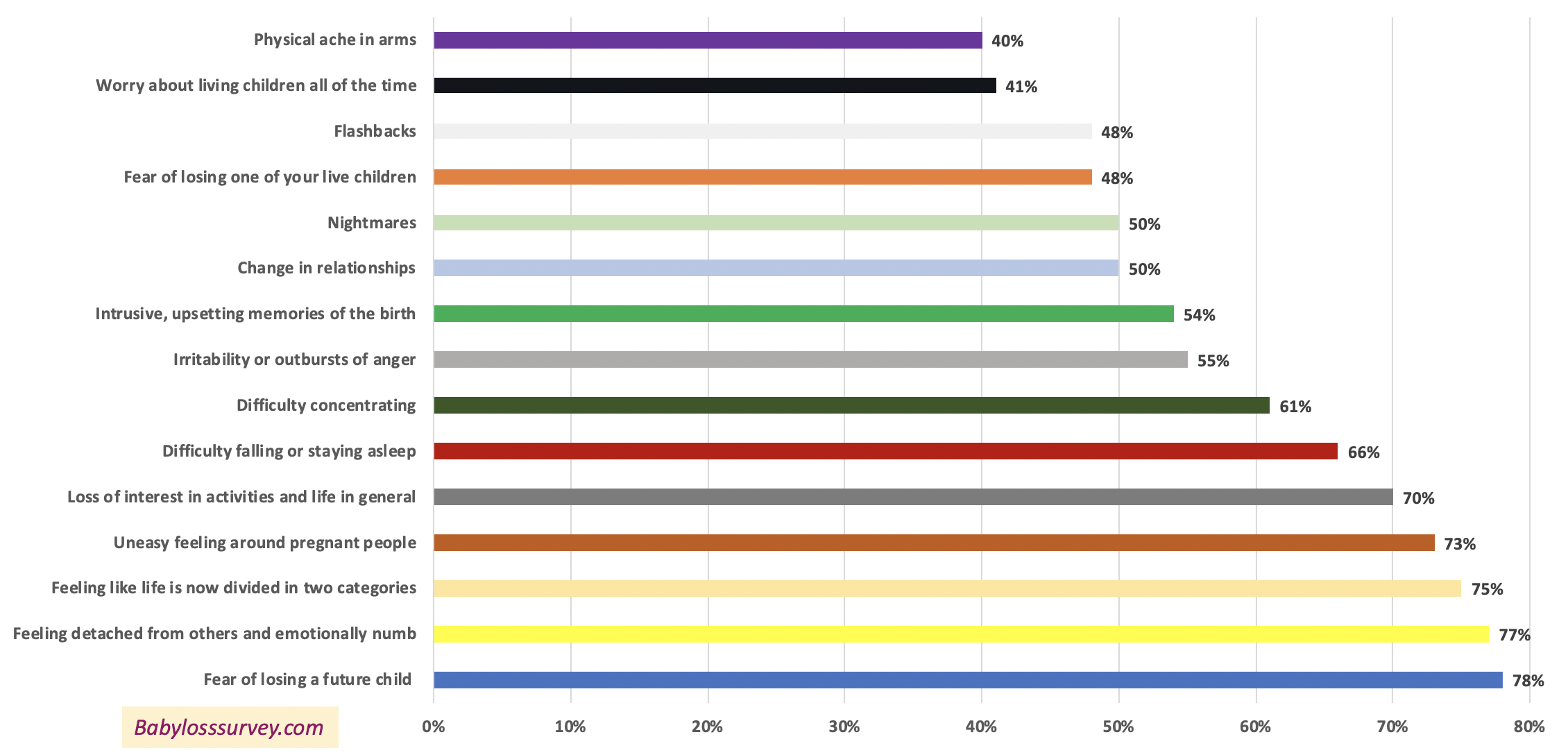
Do you feel any of the stresses listed above? Do you feel like no one else gets it? Telling your story and listening to others in a support group can be a great benefit to your healing. Get support by scheduling a peer support appointment or joining a support group.
Peer Support is Proven. Peer Support Works.